Why Slip Resistance Matters More Than Homeowners Realize Around Garages, Patios, and Pool Decks
Most homeowners focus on how concrete surfaces look — the color, the finish, whether the garage floor matches the cabinets or the pool deck complements the landscaping. But one feature quietly matters more than all of that: slip resistance.
Garages, patios, and pool decks are among the most heavily trafficked areas of a property, and they’re constantly exposed to water, oil, and humidity. Those slick conditions can turn an ordinary step into a serious injury in seconds. The difference between bare concrete and a quality coating is not just appearance — it’s protection for the people you care about every day.
The Hazard Most Homeowners Do Not See Coming
Falls aren’t something that only happens elsewhere. In fact, data compiled from the CDC, the National Safety Council, and consumer safety research, about 75% of fall accidents occur in or around the home, and they account for half of all accidental deaths in that environment. Wet or slippery surfaces are the leading factor in more than half of these incidents — driveways, garage floors, pool decks, and patios where family and guests walk every day without thinking twice.
In the South Carolina Lowcountry, heat, humidity, coastal storms, and constant moisture make those surfaces even riskier. A garage floor that’s dry one morning can be slick and dangerous after an afternoon storm. A pool deck that looks fine in the sun becomes hazardous when wet and kids are running barefoot. The consequences are serious: broken bones, head injuries, and traumatic brain injuries — especially for older adults and unpredictable children at play.
Why Bare Concrete Is Not Enough
Many homeowners assume raw concrete is rough enough to be safe. In reality, that texture wears down over time. Foot traffic, vehicles, cleaning, weather, and UV exposure gradually smooth the surface, leaving it slicker than when it was first poured. Add moisture — rain, pool splashback, morning dew — and traction disappears right when it’s needed most.
Pool decks are especially hazardous: constant water, kids running, adults moving quickly. Garage floors face oil drips, condensation, and humidity that make them slippery under everyday conditions. Patios collect rain, algae, and mildew, creating slick patches that are hard to see until someone slips.
Bare concrete may look fine, but without a slip‑resistant coating, it becomes one of the most dangerous surfaces around the home.
The Legal Reality Homeowners Should Understand
There is a dimension to this conversation that extends beyond personal safety, and it is one that homeowners in South Carolina should be aware of before dismissing slip resistance as a secondary concern.
Ben Shelton, lead attorney at Shelton Law Firm, LLC in Hilton Head Island, handles premises liability cases across the Lowcountry. In South Carolina, property owners owe a duty of reasonable care to guests on their property — and that duty applies to the condition of surfaces in and around the home.
A guest who slips on a pool deck or garage floor that a homeowner knew — or should have known — was hazardous can create serious legal exposure. The consequences of a preventable injury go far beyond medical bills, and responsibility falls squarely on the property owner when dangers are left unaddressed.
Taking reasonable steps to correct dangerous surfaces is not just the prudent thing to do — it is what responsible property ownership requires.
A professionally installed, slip-resistant concrete coating is exactly that kind of reasonable step. It is documented, permanent, and demonstrably improves the safety profile of a surface. It is not a guarantee against every possible outcome, but it reflects the kind of proactive care that responsible property ownership demands.
What Slip-Resistant Concrete Coatings Actually Do
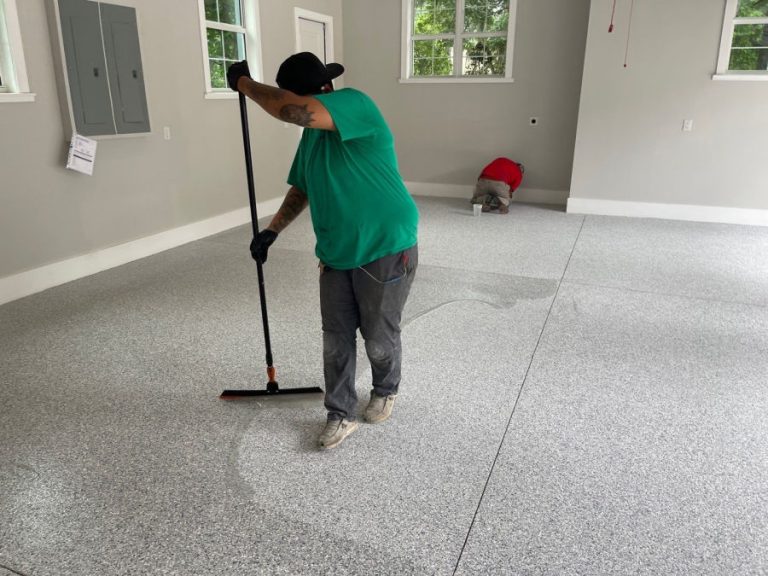
A quality coating doesn’t just change how concrete looks — it changes how it behaves underfoot, especially when wet. Polyurea systems are engineered with slip resistance built in, giving reliable traction so surfaces grip instead of slide.
The durability of polyurea coatings is also worth noting in this context. Unlike traditional epoxy coatings that chip, peel, and develop uneven surfaces over time, polyurea coatings maintain their integrity under heavy use.
On pool decks, that means fewer falls when swimmers step out quickly. In garages, oil and condensation no longer turn the floor into a hazard. On patios, rain and humidity don’t transform outdoor living into liability.
Beyond traction, coatings seal out moisture, block organic growth, and resist the surface smoothing that makes bare concrete slick over time. They’re easier to clean and maintain, and unlike epoxy that chips or peels, polyurea holds up under heavy use — preventing cracks and uneven edges that create new hazards. Safety is part of the durability, not just the appearance.
The Surfaces That Need the Most Attention
Not all concrete surfaces around a home carry equal risk, but several deserve particular attention when evaluating whether slip resistance is adequate.
Pool decks are the highest-risk surface for most residential properties. The combination of constant wet conditions, barefoot traffic, and unpredictable movement — especially among children and guests unfamiliar with the space — makes slip-resistant coating here one of the most direct and meaningful safety upgrades a homeowner can make.
Garage floors see daily traffic under conditions that unpredictably create slip hazards. Most homeowners underestimate how consistently their garage floor is exposed to oil residue, condensation, and tracked-in moisture. A coated, slip-resistant surface removes a hazard that most people have simply learned to work around.
Patios see heavy use during exactly the conditions that make them most hazardous: outdoor entertaining, summer afternoons, and rain events that leave surfaces wet for hours. High-traffic outdoor social spaces deserve the same level of safety consideration as any other frequently used surface on the property.
Driveways and walkways also benefit significantly from slip-resistant coatings. The path from a vehicle to the front door is one of the most routine walks any homeowner takes — and one of the most commonly overlooked in terms of surface safety.
Safety and Beauty Are Not a Trade-Off
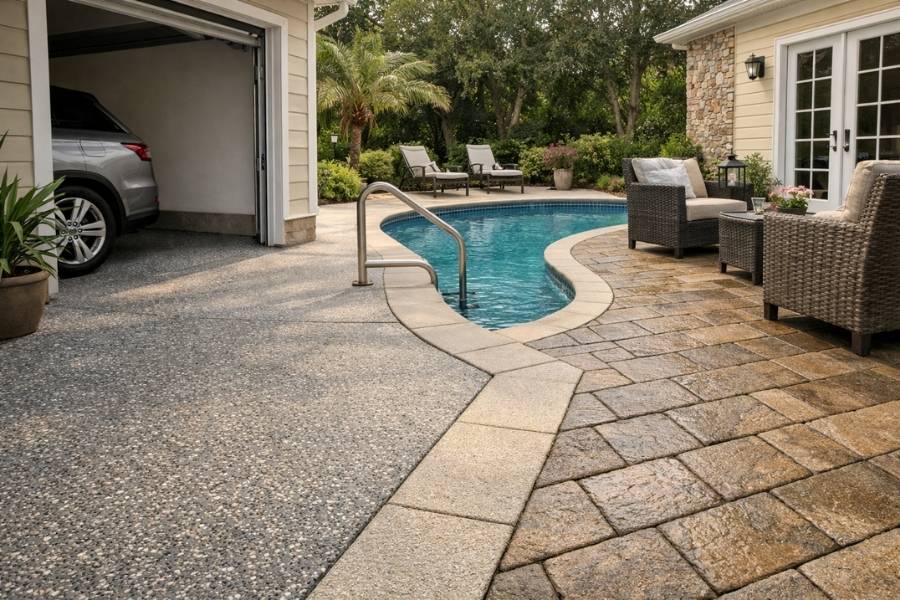
Modern concrete coatings prove you don’t have to choose between safety and style. Polyurea systems come in a wide range of colors and finishes, letting homeowners customize garages, pool decks, patios, and driveways while maintaining built-in slip resistance.
Backed by long‑term durability and warranties, these coatings aren’t just cosmetic upgrades — they’re structural investments that protect your home’s value and the people who live in it.
The Right Time to Act Is Before Someone Gets Hurt
The reason slip resistance matters more than most homeowners realize is simple: the hazard is invisible right up until it is not. Bare concrete looks fine. The garage floor looks like it always has. The pool deck seems stable. Nothing signals a problem until a foot goes out, a fall happens, and the conversation shifts from prevention to recovery.
Call a professional who specializes in transforming the concrete surfaces around your home — garages, pool decks, patios, driveways, walkways — into surfaces that are durable, beautiful, and genuinely safe. The process is completed in a single day, with no extended disruption and results that are ready for use within 24 hours.
If the surfaces around your home are bare, aging, or finishing poorly, now is the right time to address it — not after a guest slips, not after a family member falls, and not after a South Carolina summer leaves your pool deck slicker than it has any right to be.